Don't Get a Tax Notice: Your Annual GST Return Risk Management Guide
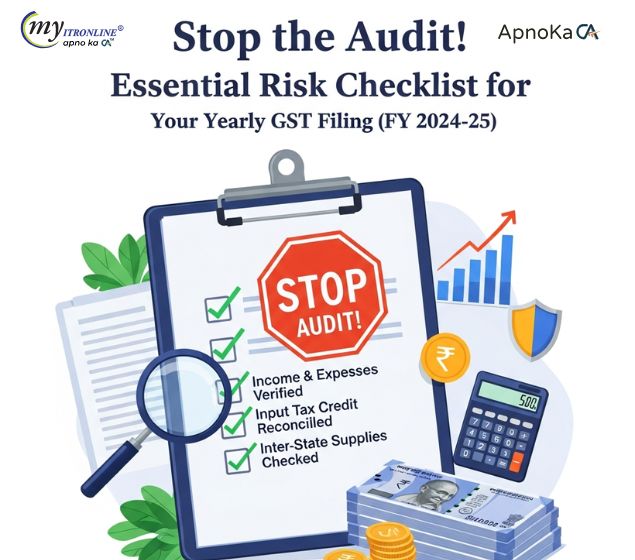
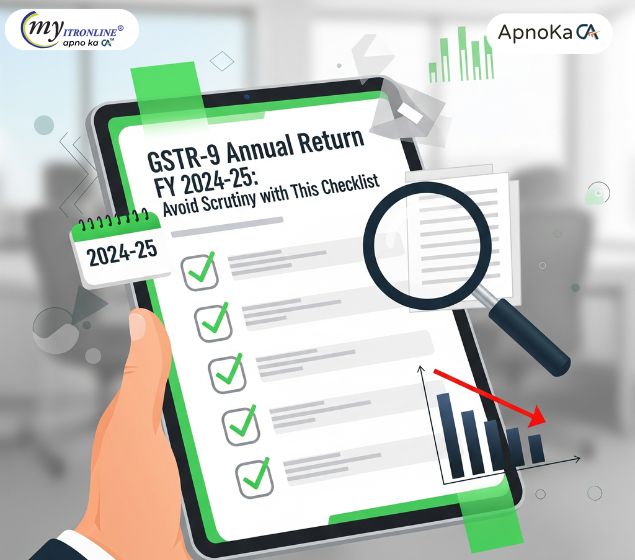
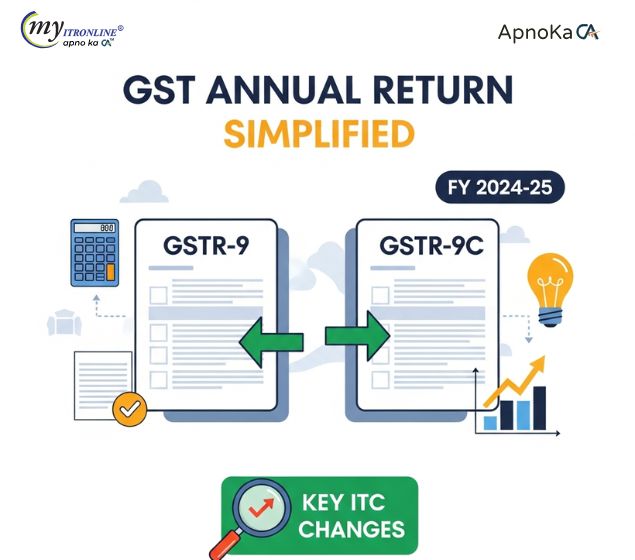
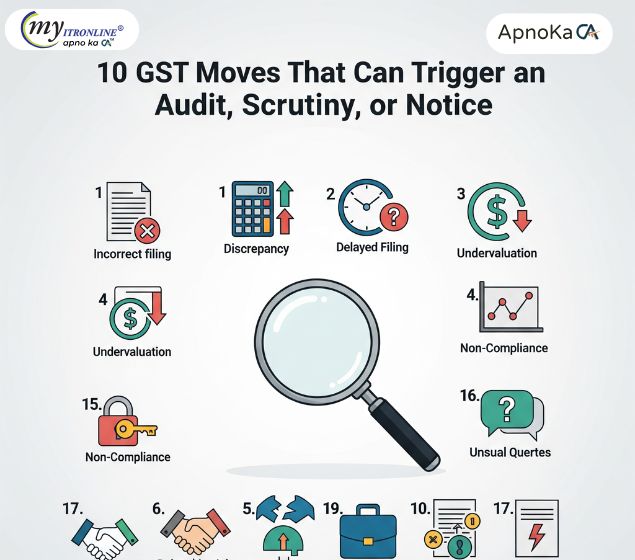
Simplify your year-end tax process. This guide cuts through the complexity of the annual GST return (GSTR-9) and highlights 25 critical errors the 'Red Flags' that often trigger government scrutiny. Use this checklist to safeguard your business before the deadline.

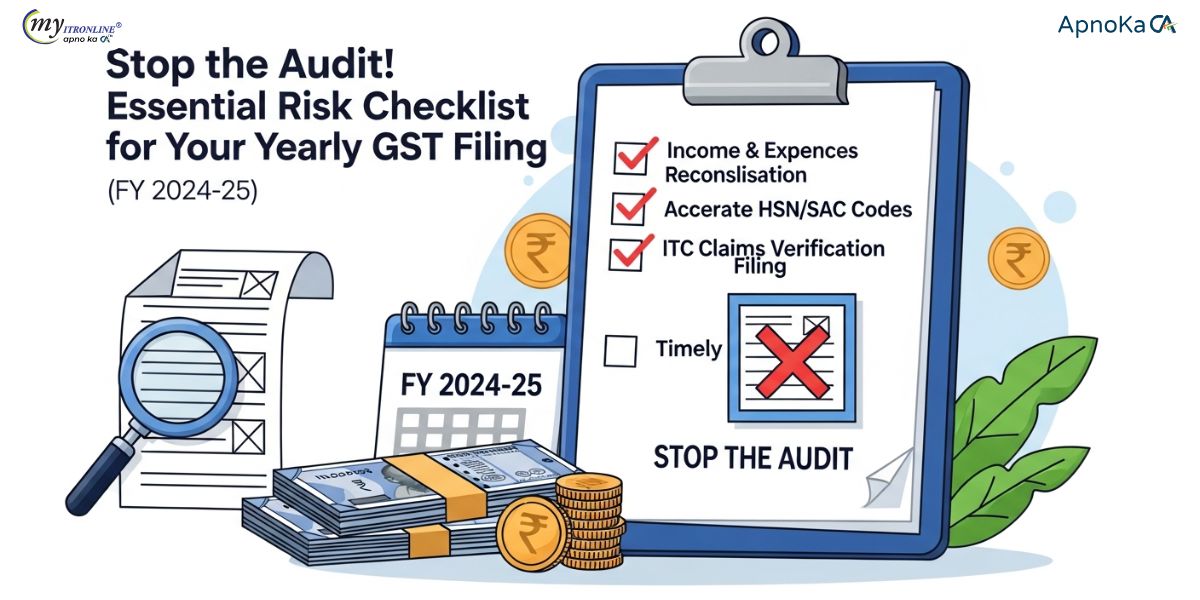
Simplify your year-end tax process. This guide cuts through the complexity of the annual GST return (GSTR-9) and highlights 25 critical errors—the 'Red Flags'—that often trigger government scrutiny. Use this checklist to safeguard your business before the deadline.
The Yearly GST Return for the Financial Year 2024-25 is your final chance to make sure your tax figures are correct. The government uses automated checks to spot these common mistakes. Fix these high-risk areas now to avoid penalties and official inquiries.
1. Sales and Income Reporting Mistakes
Ensure your total yearly income figures match everywhere.
- The Triple Mismatch: Verify the sales figures in your monthly reports (Sales Statement and Tax Payment Summary) match the sales in your official accounting books.
- Missing Adjustments: Ensure all post-sale changes, like refunds (Credit Notes) or extra charges (Debit Notes), are correctly reported.
- Export Verification: The value of sales made abroad or to special tax-free zones must match official Customs/Zone records.
- Wrong Customer Tag: Clearly label transactions as sales to other businesses or sales to general customers.
- E-commerce Tax: Make sure sales made through online platforms (where the platform pays tax) are reported in the correct section.
2. Tax Credit (ITC) Claim Risks - The Biggest Danger Zone
Incorrectly claiming the tax you paid on purchases is the fastest way to get a notice.
- Auto-Match Check: The total Tax Credit you claim must match the figure calculated by the government from your monthly filings.
- Prior-Year Credit: Any Tax Credit related to the previous year but claimed in the current year must be clearly shown in the designated field.
- Wrong Reversals: Be careful not to confuse canceled Tax Credit from past years with current-year adjustments.
- Asset Mix-up: Tax Credit claimed on long-term assets (Machinery/Capital Items) should not be mixed with the credit on daily running costs (Inputs).
- Illegal Claims: Tax Credit that cannot legally be claimed (e.g., on staff food, personal use) must be formally canceled (reversed).
- Reconciliation Gap: Make sure your final Tax Credit number matches your books, the annual return, and the final Reconciliation Statement.
3. Reverse Charge (Buyer Pays Tax) Errors
This is when you, the buyer, are responsible for paying the tax.
- Wrong Year Reporting: Payments made for buyer-pays-tax transactions should be reported in the financial year they belong to, even if you paid the tax later.
- Missing Paperwork: When buying from a small, non-registered seller under this rule, you must create a Self-Invoice.
- Payment vs. Credit: Ensure that every tax payment made under this rule is correctly claimed back as Tax Credit (if you are eligible).
4. Problems Matching Government Records
- Over-Claiming Credit: The total Tax Credit you claim must not be more than what the government's auto-generated purchase summary (Form 2B) shows.
- Import Tax: Verify that the tax credit paid on goods imported from overseas matches Customs records.
- Incorrect Adjustment: Ensure calculated Tax Credit reversals related to personal or tax-free sales are reported correctly.
5. Tax Owed and Late Payment Risks
- Cash Payment Rule: Any extra tax you owe, discovered only in the annual return, must be paid only using your cash balance through the special payment form (DRC-03).
- Interest/Penalty Check: Ensure that any interest or late-fee payments recorded in your books match the amounts you report.
- Late Disclosure: Sales or Tax Credit from the current year that you reported late (in the next year’s monthly filings) must be correctly disclosed in the specific tables for cross-year reporting.
6. Errors in Reporting Tax-Free Sales
- Accurate Classification: Ensure that sales that are completely tax-free (Exempt/Nil-rated) or not under GST rules (Non-GST) are reported precisely in the correct section.
7. Final Reconciliation Risks (For Sales over ₹5 Crore)
- Sales Reconciliation: The total sales number in your accounting books must perfectly match the total sales in your annual return.
- Explain Differences: Any big differences in Tax Credit figures between your books and the annual return must be clearly explained in the specific notes section.
- Stock Accountability: Report changes to your inventory (like goods being scrapped) to prevent the tax office from thinking you made an unreported sale.
8. Filing and Exemption Oversights
- Time Limit: Ensure your yearly return is filed within the strict three-year legal time limit.
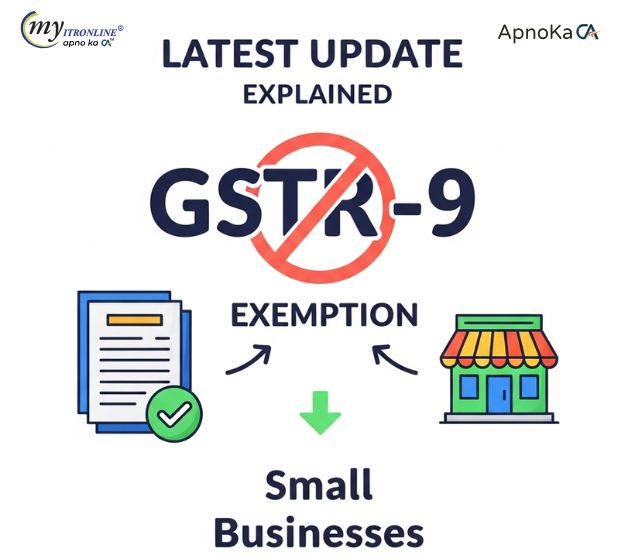
- The ₹2 Crore Rule: If your total yearly sales were below ₹2 Crore, make sure you claim the exemption from filing the annual return.
- Inactive Businesses: If an inactive registration had total yearly sales exceeding ₹2 Crore, a 'NIL' return still needs to be filed.
By reviewing and correcting these 25 potential Red Flags, you dramatically increase the compliance of your yearly GST filing and reduce the chance of a tax notice for FY 2024-25.

FILING YOUR INCOME TAX RETURN F.Y 2024-25 (A.Y. 2025-2026) WITH MYITRONLINE
The income tax filing deadline is right around the corner. If you haven’t filed yet, do it today with Myitronline! Avoid last minute rush and file your tax return today on MYITRONLINE in Just 5 mins.(www.myitronline.com)
If you are looking for eCA assistance to file your income tax return/ GST, you can opt for MYITRONLINE eCA assisted plan starting
Upload Salary Individual Form-16
If you have any questions with filing your tax return, please reply to this mail. info@myitronline.com OR call 9971055886,8130309886.
Note-All the aforementioned information in the article is taken from authentic resources and has been published after moderation. Any change in the information other than fact must be believed as a human error. For queries mail us at marketing@myitronline.com


Krishna Gopal Varshney
An editor at apnokacaKrishna Gopal Varshney, Founder & CEO of Myitronline Global Services Private Limited at Delhi. A dedicated and tireless Expert Service Provider for the clients seeking tax filing assistance and all other essential requirements associated with Business/Professional establishment. Connect to us and let us give the Best Support to make you a Success. Visit our website for latest Business News and IT Updates.
Leave a reply
Your email address will not be published. Required fields are marked *Share this article
Krishna Gopal Varshney
An editor at Myitronline
Krishna Gopal Varshney, Founder & CEO of Myitronline Global Services Private Limited at Delhi. A dedicated and tireless Expert Service Provider for the clients seeking tax filing assistance and all other essential requirements associated with Business/Professional establishment. Connect to us and let us give the Best Support to make you a Success. Visit our website for latest Business News and IT Updates.
View articles

News Offers