
# taxpayerrights
12 posts in `taxpayerrights` tag
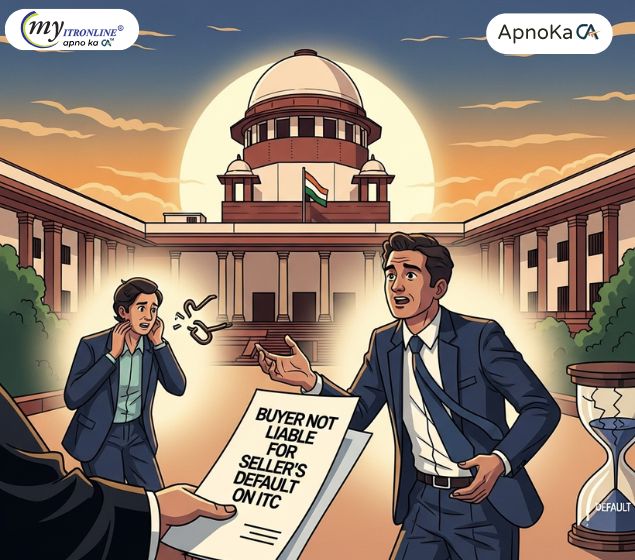
Supreme Court Relief: Buyer Not Liable for Seller’s Default on ITC
The Supreme Court has clarified that a genuine buyer cannot be denied Input Tax Credit (ITC) merely because the seller failed to deposit tax. In the case of Commissioner Trade & Tax Delhi vs. Shanti Kiran India Pvt. Ltd., the Court emphasized that if purchases are genuine, invoices valid, and payments made through banks, ITC should not be denied. This ruling strengthens taxpayer rights and prevents innocent buyers from being penalized for the seller’s default.
-
By Krishna



Supreme Court Backs Genuine Buyers: No ITC Denial for Seller’s Default
The Supreme Court has ruled that genuine buyers cannot be denied Input Tax Credit just because the seller failed to deposit tax or lost registration. This landmark decision under DVAT sets a strong precedent for GST cases too, ensuring fairness and protecting honest taxpayers.
-
By Krishna

Big relief for taxpayers: Supreme Court protects buyers from seller’s default
The Supreme Court of India has held that a genuine buyer cannot be denied ITC merely because the seller failed to deposit tax. In M/s Shanti Kiran India Pvt Ltd vs Commissioner, Trade & Tax, Delhi (October 9, 2025), the Court emphasized fairness: action should target the defaulting seller, not the compliant purchaser. While the case arose under the Delhi VAT Act, its reasoning strongly influences GST disputes under Section 16(2)(c). Businesses gain a constitutional shield against automatic ITC denials but must continue robust documentation, vendor checks, and genuine transactions. Example: if you paid ₹100 in tax against a valid invoice and acted in good faith, your ITC right stands.
-
By Krishna
Supreme Court’s Big GST Decision Huge Relief for Taxpayers
The Supreme Court of India has ruled that once a taxpayer pays the 10% pre-deposit required to file a GST appeal, the government cannot freeze bank accounts or recover additional funds. This landmark decision protects honest taxpayers and ensures fair enforcement under GST law.
-
By Krishna

Tax Refunds Can’t Be Denied for Form 26AS Mismatch: High Court Ruling
The Allahabad High Court has ruled that tax refunds cannot be denied just because TDS is missing from Form 26AS. If a taxpayer provides valid Form 16A certificates, the Income Tax Department must verify the claim with the deductor instead of rejecting it outright. This protects honest taxpayers from delays caused by clerical errors.
-
By Krishna
Income Tax Department’s Section 87A Relief: What Taxpayers Must Know About STCG Rebate Claims
The Income Tax Department has issued relief for taxpayers who claimed Section 87A rebate on short-term capital gains (STCG). If demands are paid by December 31, 2025, interest will be waived. Learn what went wrong, what’s been clarified, and what you should do next.
-
By Krishna
.jpg)
ITAT Cancels Tax Addition on Demonetization Cash Deposits
This blog post provides a detailed analysis of a significant Income Tax Appellate Tribunal (ITAT) ruling that cancelled a ₹10.46 lakh tax addition against a senior citizen. The case involves a large cash deposit made during the 2016 demonetization period, which the Assessing Officer had treated as unexplained money under Section 69A. The article explains the taxpayer's defense—that the cash was an accumulation of prior bank withdrawals—and breaks down the ITAT's reasoning, which centered on the "preponderance of probabilities" and the lack of contrary evidence from the revenue. The post highlights key takeaways for taxpayers, emphasizing the importance of plausible explanations and proper documentation.
-
By Krishna
Understanding the Supreme Court’s Review of CGST Act Section 168A
The Supreme Court is reviewing the legality of CGST Act Section 168A, which allows deadline extensions for tax compliance. This blog delves into the implications for taxpayers, the legal challenges, and potential outcomes of this significant case.
-
By Krishna
.jpg)
CBIC Introduces New Guidelines for GST Arrest and Bail in 2025
The CBIC has updated the arrest and bail standards for GST 2025, concentrating on fairness, transparency, and legal compliance. Taxpayers now have protection against arbitrary arrests and clearer bail provisions. These amendments aim to boost business confidence and protect taxpayer rights.
-
By Krishna
.jpg)
Tax Dispute Resolution: How Section 245 Can Help
This blog offers a thorough explanation of Section 245 of the Income-tax Act, 1961, which addresses appeals and dispute resolution in relation to income tax. The blog highlights the significance of this section in preserving taxpayer rights and guaranteeing an equitable and transparent process by outlining its contents, methods, and ramifications for taxpayers.
-
By Krishna

Understanding Section 156 of the Income Tax Act
Receiving an income tax notice can be a daunting experience, especially if you're unsure of what it entails. Section 156 of the Income Tax Act is a crucial provision that deals with outstanding tax demands. This blog post provides a comprehensive guide to understanding income tax notices under Section 156, including what it means, how to respond, and the consequences of delay.
-
By Krishna

Section 148A(d) of the Income Tax Act: What You Need to Know
This comprehensive guide explains Section 148A(d) of the Income Tax Act, covering the procedure for issuing notice, conducting inquiries, and the implications for taxpayers. Get insights into the time limitation clause, approval of specified authority, and exceptions.
-
By Krishna